High Blood Pressure

High Blood Pressure

28% of adults have high blood pressure in the UK, that is 15 million adults, at least half of these are not receiving effective treatment and millions are likely to be undiagnosed.

50% of heart attacks and strokes are associated with high blood pressure in the UK.

High blood pressure is the leading risk factor for CVD (Cardiovascular Disease) in the UK.

Why Measure Blood Pressure?

It is known as the silent killer.  If your blood pressure is too high, it can cause damage.  It damages blood vessels and heart muscle causing strokes, heart attacks, heart failure, kidney failure, narrowed leg arteries and sight damage. 

USUALLY YOU WILL HAVE NO SYMPTOMS.

Healthy Hearts Carmarthenshire
Carmarthenshire Healthy Hearts

Where Can I Check My Blood Pressure?

blood pressure
In your GP practice, some by making an appointment, some surgeries have ‘health pods’ in their waiting rooms.
Blood Pressure
At home

British heart foundation
British Heart Foundation Guide

Help Leaflet
Help Leaflet in English


nurses
See our Healthy Hearts Carmarthenshire nurses


Which blood pressure monitor?


Blood Pressure
At home


British heart foundation
British Heart Foundation Guide


blood pressure
In your GP practice, some by making an appointment, some surgeries have ‘health pods’ in their waiting rooms.
Help Leaflet
Help Leaflet in English

Help Leaflet
Help Leaflet in English

Which blood pressure monitor?

nurses
See our Healthy Hearts Carmarthenshire nurses located throughout the county

What should my blood pressure measure?

140/80 or less.

Two or more readings over 140/80mmHg is considered high blood pressure and you should see your GP for treatment and further investigations.  If over 180/110 you should speak to your GP that day.

Ways to prevent high blood pressure.

  • Enough physical exercise activity, further information can be found here
  • Maintaining a healthy weight (link to page)
  • Reducing salt intake
  • Drinking alcohol within healthy limits, more information can be found here.

How Often Should I Measure My Blood Pressure?

At least once a year, though this should be more often if you are advised to do so by your GP during treatment.

Practical tips for measuring your blood pressure at home can be found below with further tips here.

Tips on Measuring Your Blood Pressure

After measuring your upper arm, make sure your monitor comes with a cuff to cover your upper arm.

Ensure that you have not drunk caffeinated drinks, smoked or exercised within 30 minutes of taking your blood pressure measurement.

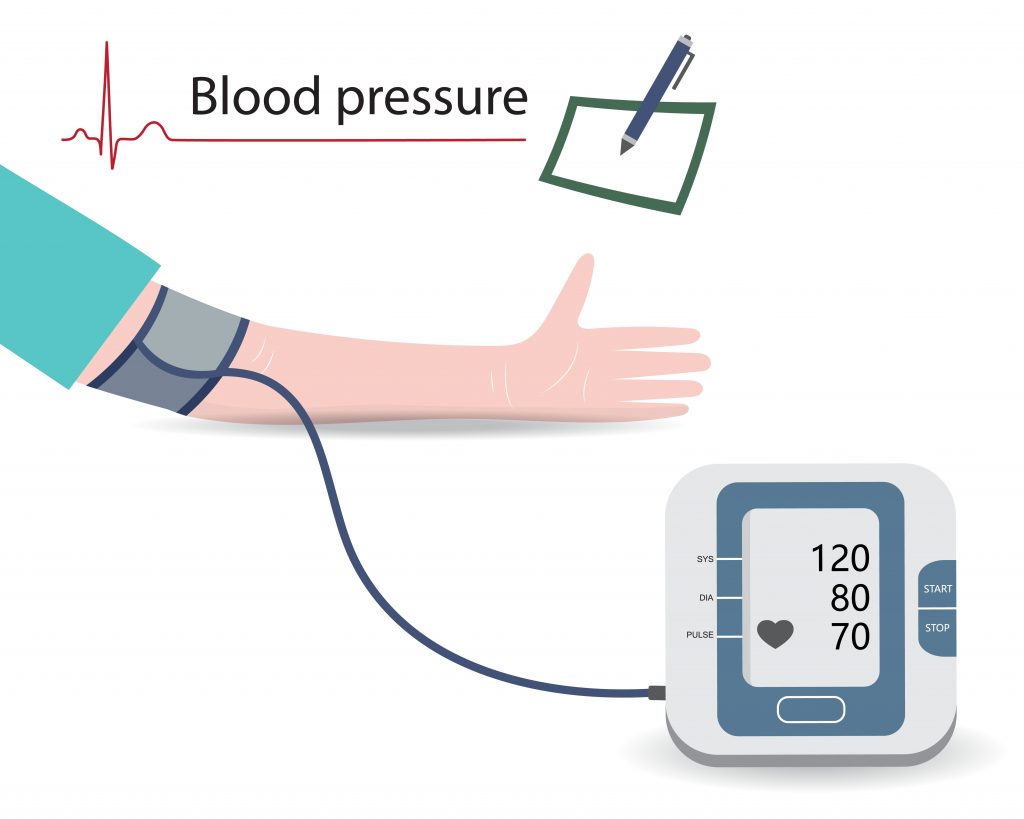
You should be seated on a chair that allows you to place your feet flat to the floor with your back straight and supported by the back of the chair.  You should be able to rest your arm on a flat surface, such as a table to ensure that your upper arm is in line with your heart.  Wrap the cuff just above your elbow.

For reasons of accuracy, take two or three readings within a minute of each other and take the lowest reading as your measurement.

To have a full understanding of your readings it is important that the date, time and measurement should be recorded and presented to your medical professional, if necessary.

Watch this video from the British Heart Foundation to better understand your blood pressure readings.